

Can A Cappella Suit Corporate Events?
The first few minutes of a corporate event often decide whether guests remain in polite networking mode or begin to feel that they are part of something worth remembering. Can a cappella suit corporate events? Absolutely - provided the performance is planned around the room, the audience and the purpose of the occasion. Four confident voices can create a surprisingly full sound, a genuine talking point and a level of personal connection that background playlists rarely achieve.
For organisers, the appeal is practical as well as artistic. A professional vocal quartet arrives with a compact footprint, needs no instrument-heavy stage setup and can adapt its delivery from an upbeat welcome to a focused feature performance. The result is live entertainment that feels distinctive without placing unnecessary pressure on the venue, production schedule or budget.
Why a cappella works in a business setting
Corporate entertainment has a difficult job. It must lift the mood without disrupting the programme, appeal across age groups without becoming bland, and reflect well on the host organisation. A polished a cappella performance meets those demands because the music is immediate and recognisable, while the format remains refined.
There is nothing between the audience and the performance. No loud band mix, no complicated backline and no visual clutter. Guests hear the blend, the rhythm and the personality of the singers directly. That clarity works especially well in hotel ballrooms, conference spaces, offices, restaurants and reception areas where a full band may be impractical.
The best repertoire also bridges generations. Barbershop harmony brings warmth and charm; doo wop adds energy; jazz standards create a sophisticated atmosphere; country selections can suit a regional or western theme; and Christmas music gives seasonal gatherings a sense of occasion. Familiar songs encourage smiles and conversation, even among guests who would not describe themselves as live-music enthusiasts.
Can a cappella suit corporate events of every kind?
Not every corporate event calls for the same style of performance. A cappella is most effective when the format supports the event rather than competing with it. That makes it a flexible choice, but not an automatic one.
For a client reception or networking evening, a quartet can circulate or perform in a designated area with upbeat, approachable material. The music adds energy to the room, yet guests can still talk. At an awards dinner, the group can provide a short opening set, introduce a theme with a tailored song choice or perform between programme segments while the room resets.
A conference benefits from something different. Delegates who have spent hours listening to presentations respond well to a concise, high-impact performance that refreshes the atmosphere. A lively four-part arrangement can work as a welcome, an after-lunch lift or a memorable closing moment. It should be timed tightly, however. A long set during a packed agenda can feel like an interruption, regardless of the quality of the music.
For staff celebrations, milestone events and holiday parties, a cappella often has its greatest freedom. The performance can be more playful, nostalgic and interactive, with a repertoire shaped to the season and the company culture. It remains polished enough for senior leadership and invited guests while bringing personality to a room that may otherwise feel formal.
Product launches and promotional appearances present a different opportunity. Here, vocal performance can attract attention quickly, particularly in a public venue or busy exhibition environment. The sound of live harmony carries a human presence that makes passers-by pause. The key is brevity, strong song selection and performers who understand how to engage people without overwhelming the brand message.
The details that make the booking successful
A successful entertainment booking starts with a clear brief. Before choosing a performance length or repertoire, consider what guests should feel when the singers finish. Energised? Appreciated? Festive? Impressed? That answer will guide every practical decision.
Match the performance to the event moment
Background entertainment and feature entertainment are not the same. During cocktails, guests need space to converse, so shorter selections at a comfortable volume tend to work best. For a gala dinner, a featured set can be more theatrical, with a proper introduction and the audience’s full attention.
Give the performance a place in the running order rather than treating it as filler. A quartet can welcome guests as they arrive, create momentum before speeches, cover a transition or close a programme on an upbeat note. When performers know exactly what is happening before and after their set, they can manage the energy of the room far more effectively.
Be honest about the room
A cappella can sound exceptional in an intimate room, but large, noisy spaces require thought. The acoustics, ceiling height, guest numbers and nearby activity all affect what people will hear. In some settings, professional sound reinforcement is advisable. In others, the natural sound of four voices is exactly what makes the performance special.
This is where experienced performers matter. They can advise on placement, performance style and whether amplification will help. A group should not be expected to compete with a packed bar, a clattering service station or a crowd speaking at full volume. If the goal is attentive listening, schedule the set at a point when the room can give it that attention.
Choose recognisable music with purpose
A corporate playlist does not need to be predictable, but it should be welcoming. Well-known songs and styles give guests an easy way into the performance. The strongest programmes balance familiar material with a few pieces that showcase the group’s musical personality.
Theme matters, too. A western Canadian event may welcome country harmony or classic barbershop; a formal awards evening may suit jazz standards; a December programme benefits from carefully chosen Christmas arrangements. Song choices should enhance the occasion, not turn the performance into a private concert that ignores the audience in front of it.
What organisers should expect from professional singers
A corporate audience notices the small things. A late arrival, unclear stage requirements or an act that runs over time can undermine an otherwise well-produced event. Professional entertainers make the organiser’s job easier by communicating clearly, arriving prepared and respecting the event timetable.
They should also understand that corporate guests are diverse. The room may include executives, frontline staff, clients, partners and family members. Good performers read the response, adjust their interaction and keep the tone appropriate. The aim is never to force participation. It is to create a shared moment that feels natural.
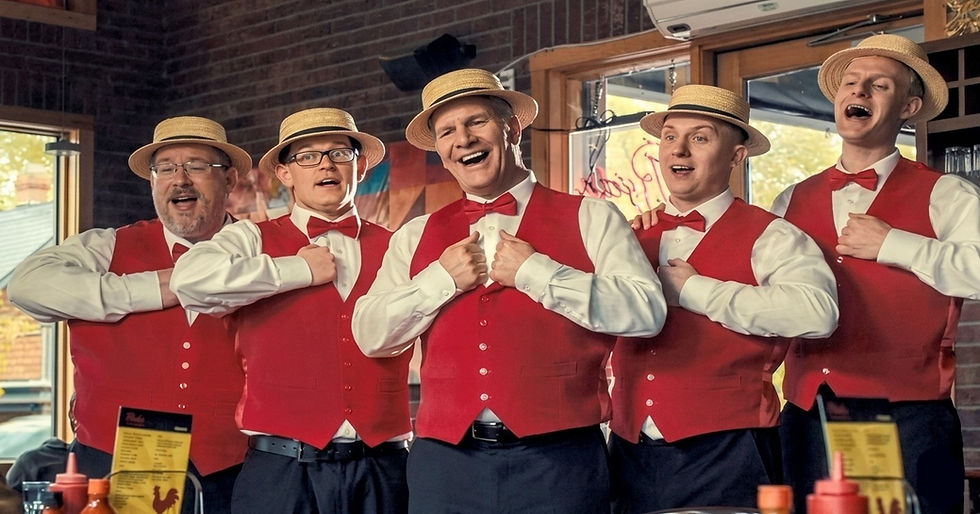
Executive Quartets brings more than 20 years of experience and over 250 performances to corporate, community and private events across Western Canada. That experience matters because it goes beyond singing well. It means understanding how to work with event planners, fit into a programme and deliver the polished, crowd-friendly performance clients expect.
The trade-offs worth considering
A cappella is not designed to replace every type of corporate entertainment. If an event needs a dance floor kept busy for several hours, a DJ or dance band may be the better fit. If the venue holds several hundred guests in a high-noise environment, a small vocal group may need amplification and a carefully protected performance window to make the intended impact.
Equally, a quartet is not background wallpaper. Its strength is personality and presence. Organisations that want an entirely unobtrusive atmosphere may be better served by instrumental music. But where the goal is to give guests something warm, surprising and easy to remember, live harmony is a compelling alternative to the usual choices.
The question is less whether a cappella can work and more what role it should play. A short welcome performance may be perfect for one event; a formal twenty-minute feature set may be right for another. The most effective decision comes from aligning the performance with the guest experience, rather than booking entertainment simply because there is a gap in the agenda.
When the final speech is over and guests are deciding what they will remember, a great live performance gives them something more than a photograph or a branded table setting. It gives them a shared reaction - the kind that starts conversations in the room and carries on long after the event has finished.


Comments