

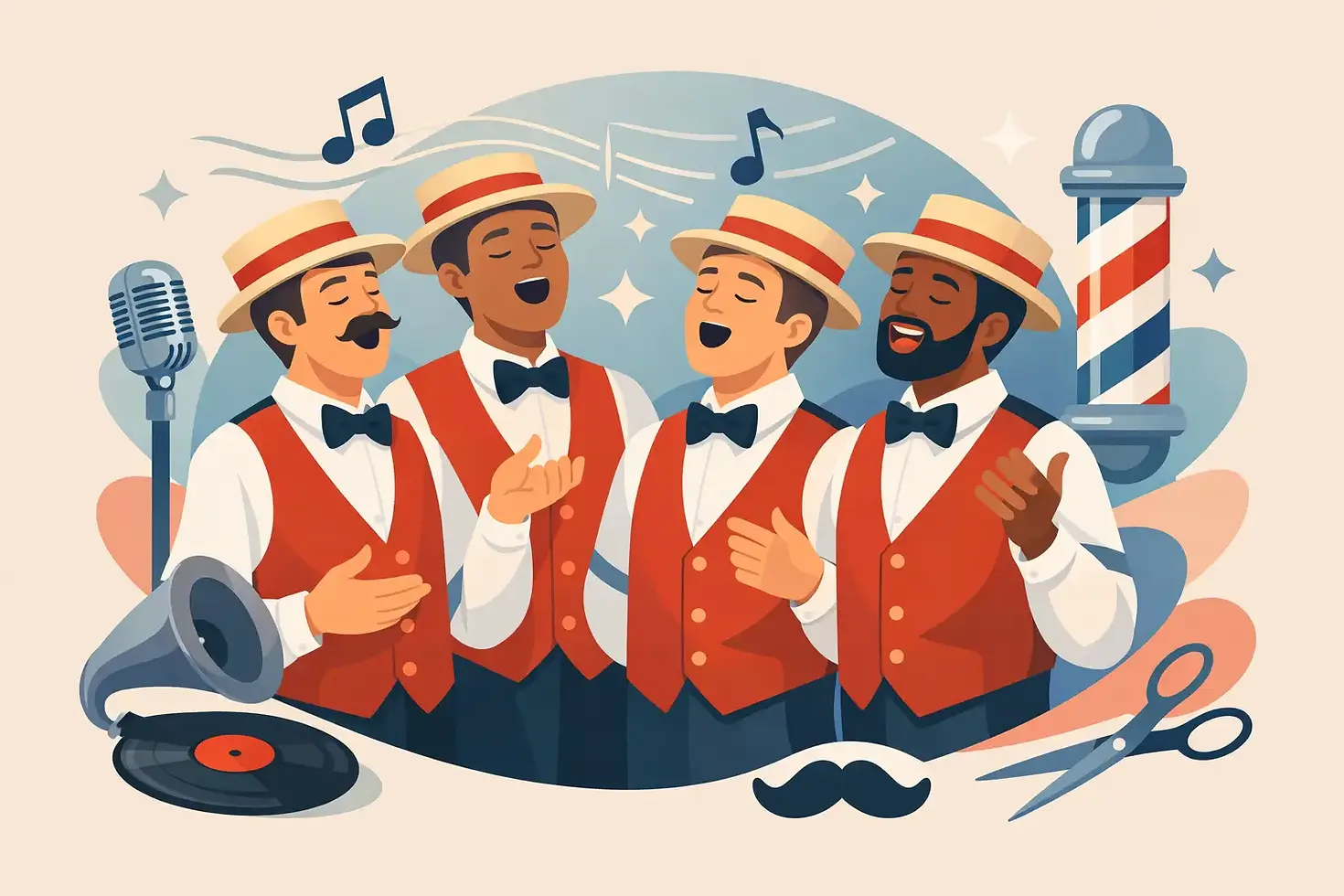
12 Fun Facts About Barbershop Quartets
A great vocal quartet can change the feel of a room before the first handshake, toast or presentation is complete. These barbershop quartet fun facts explain why this distinctive four-part sound remains a polished choice for corporate functions, weddings, community celebrations and promotional appearances.
Barbershop Quartet Fun Facts That Guests Can Hear
1. Four singers create a remarkably full sound
A traditional barbershop quartet has four vocal parts: tenor, lead, baritone and bass. The lead usually carries the melody, while the other three parts build closely around it. There are no instruments to hide behind, so every note, word and entrance must be accurate.
For an event audience, that clarity is part of the appeal. Four voices can sound surprisingly substantial without filling the room with stage equipment, amplifiers or a large band setup. It is an elegant format for a reception, dinner, awards presentation or venue where space and load-in time are limited.
2. The harmony is built to “ring”
The signature barbershop sound is not simply four people singing at once. When a chord is exceptionally well tuned, listeners may hear extra overtones that seem to float above the singers. Performers often call this a ringing chord.
It is a real acoustic effect, not a trick. Precise vowel matching, balance and tuning allow the voices to reinforce one another. That moment can make a familiar song feel fresh and unexpectedly powerful, particularly in an intimate room where guests are close to the performers.
3. The bass is more than the low voice
The bass provides the foundation of the quartet, but the role is far from static. A skilled bass singer establishes the harmonic direction, helps define the rhythm and gives the group its warmth and weight. When the bass line moves, the whole arrangement can gain energy and momentum.
This is one reason live a cappella music feels so immediate. Guests are hearing the rhythmic pulse and the harmonic foundation being created in real time, rather than played back from a track.
4. Barbershop is closely arranged, not casually improvised
Barbershop arrangements are carefully designed. The parts fit tightly around the melody, often using rich dominant seventh chords and close harmony to create the style’s recognisable character. A quartet may add personality through phrasing, movement and comic timing, but the musical framework is highly disciplined.
That discipline matters when booking entertainment for a professional occasion. A relaxed, entertaining performance should still have clean starts, confident pacing and dependable musical standards. The best quartets make a complex craft look effortless.
5. The style has a complicated and important history
Barbershop became widely popular in North America in the late nineteenth and early twentieth centuries, but its story is broader than the familiar striped-shirt image suggests. Historians have documented meaningful African American influences on the development of close-harmony singing and the social music-making associated with the style.
The precise origins are debated, as they often are with folk and popular traditions passed between communities. What is clear is that barbershop developed through live, social singing - people gathering around songs, harmony and shared enjoyment. That communal energy still comes through in a good performance.
More Barbershop Quartet Fun Facts for Event Planners
6. The classic costume is optional
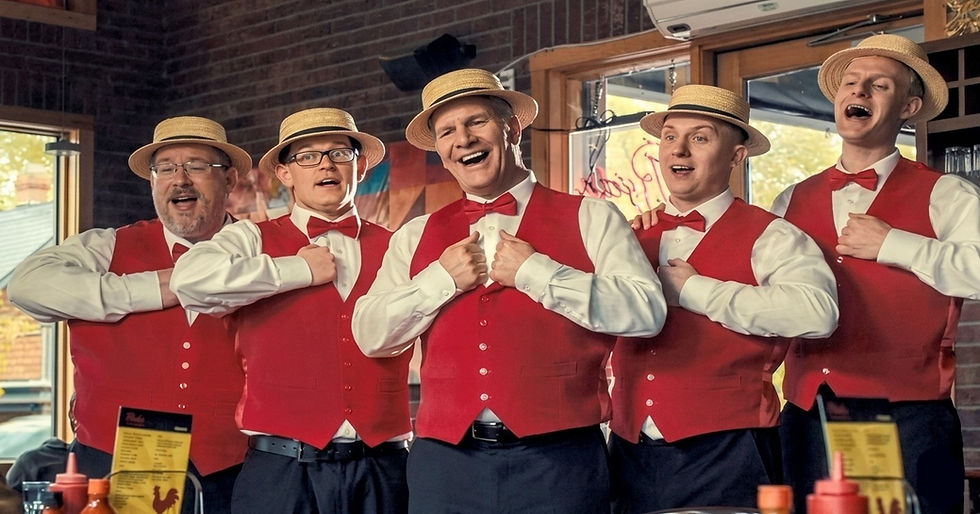
Boater hats, bow ties and waistcoats are recognisable visual shorthand for old-fashioned barbershop, but they are not a requirement. A professional quartet can dress to suit the occasion: formal attire for a gala, coordinated business wear for a conference, period styling for a themed celebration or festive costumes for Christmas programming.
This flexibility is valuable because entertainment should support the event’s identity, not compete with it. For a vintage-themed function, the traditional look can be part of the fun. For a polished corporate event, a contemporary presentation may be the better fit.
7. The repertoire reaches well beyond old favourites
Many guests expect to hear early popular songs when they see a quartet. Those songs can work beautifully, especially where nostalgia is part of the brief. Yet modern barbershop performers can also present doo wop, country, jazz standards, seasonal music and carefully arranged popular favourites.
The right programme depends on the audience and setting. A lunchtime corporate appearance might need upbeat, recognisable material delivered in short sets. A wedding reception may call for romance and warmth. A tourism attraction may benefit from music that stops passers-by, creates photographs and gives visitors a memorable local experience.
8. A quartet can perform almost anywhere
Because the instrument is the human voice, a quartet has fewer production demands than many live acts. There is no drum kit, guitar backline or keyboard rig to accommodate. In the right acoustic setting, four trained voices can perform naturally and effectively with minimal technical support.
That does not mean sound planning never matters. A large ballroom, outdoor activation or noisy trade-show floor may require microphones and professional audio reinforcement. The advantage is flexibility: the act can adapt from a close-up arrival performance to a staged feature set without the complexity of a full band.
9. Four voices are ideal for audience interaction
A quartet is compact enough to move through a venue, greet guests or deliver a surprise song at a table. It is also substantial enough to command a stage and hold attention during a featured performance. That range is difficult to achieve with many other music formats.
For hosts, the result is entertainment that can be integrated rather than merely scheduled. A quartet may welcome attendees, punctuate a programme break, present a musical tribute or provide a lively transition between formal parts of the event.
10. Comedy works best when the singing is excellent
Barbershop has a well-earned reputation for charm, humour and theatrical presentation. However, the strongest comic moments land because the music is secure. A perfectly held chord after a playful lyric, a precisely timed pause or a dramatic key change can earn a bigger reaction than an overworked joke.
This balance matters for mixed audiences. Guests of different ages may not share every cultural reference, but they understand musical confidence, warmth and timing. Quality performance creates the broad appeal; humour gives it an extra lift.
11. The sound is especially effective at Christmas
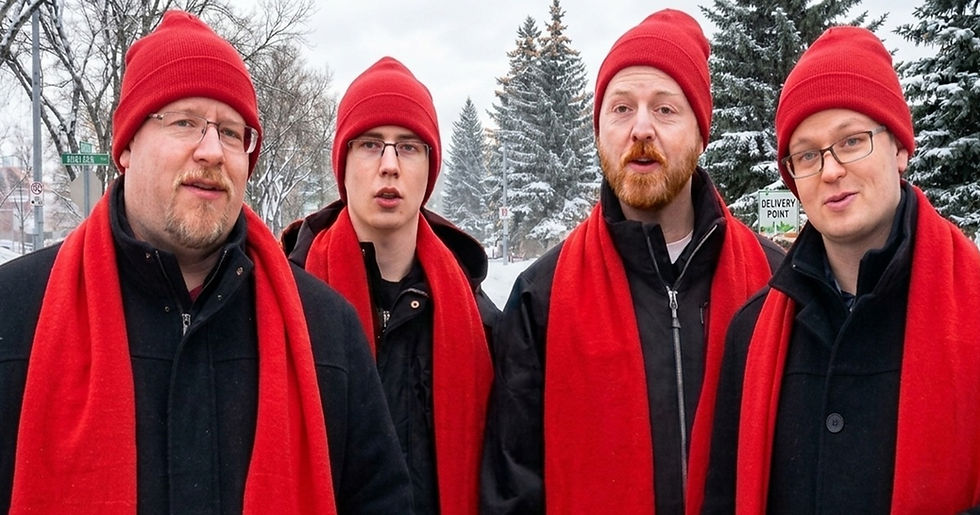
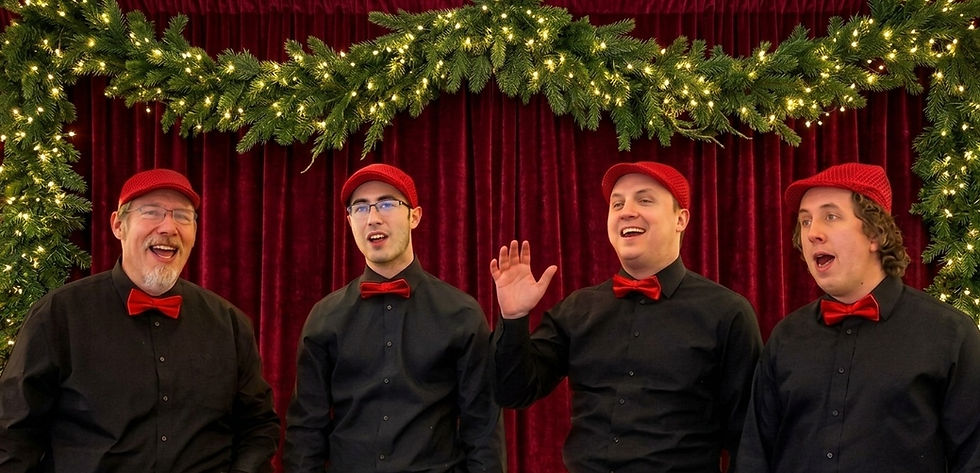
Christmas harmony has a natural affinity with the barbershop style. Carols and seasonal standards often feature strong melodies and warm chord progressions that suit four-part arrangements. A quartet can bring an inviting, celebratory atmosphere to staff parties, holiday markets, client events and family gatherings.
The trade-off is demand. Seasonal dates are often booked well ahead, particularly for groups that can combine professional presentation with a varied Christmas repertoire. Early planning gives organisers more choice over timing, format and musical direction.
12. Experience changes the whole event experience
A quartet is not simply four people who can sing. At a live event, performers must read the room, work to a schedule, liaise with organisers and deliver confidently whether the audience is seated, mingling or passing through a public space. Those details determine whether entertainment feels like an added complication or a highlight.
With more than 20 years of experience and over 250 performances, Executive Quartets understands that professional a cappella entertainment must be both musically memorable and event-ready. The best performance is one guests talk about afterwards - and one organisers can enjoy because it ran exactly as planned.
A well-chosen quartet offers more than nostalgia. It gives an event a human sound: immediate, polished and impossible to duplicate with a playlist. When the final chord rings, guests tend to look up, smile and remember where they were when they heard it.
Comments