

A Practical Guide to Themed Music Programming
A themed event can look impressive long before the first guest arrives, but the music determines whether the room actually feels connected to the idea. This guide to themed music programming is designed for planners and hosts who want entertainment that supports the occasion, suits the audience and remains memorable after the final applause.
For live vocal entertainment, the advantage is clear: four strong voices can create atmosphere without competing with conversation, overwhelming a venue or requiring the footprint of a full band. The right programme brings a theme to life with familiar songs, carefully chosen pacing and polished performance.
Start with the event outcome, not the song list
A theme is a useful creative brief, not a reason to play every song with a matching title. Before selecting repertoire, decide what guests should feel and do at each point of the event. A corporate reception may need warmth and energy without making networking difficult. A wedding drinks reception may call for romance, charm and a gentle lift in pace. A tourism activation may need instant recognition and short, high-impact moments that stop passers-by.
Ask whether music is meant to be the main attraction, an elegant backdrop or a series of featured moments. The answer affects song choice, volume, set length and performer placement. A 20-minute performance designed to launch an awards dinner should build anticipation differently from two 45-minute sets during a festive evening.
The strongest programmes also account for the room. A lively doo wop set can transform a casual gala, while jazz standards may better suit a formal dining space. Theme and venue should reinforce one another rather than compete.
Build the theme around recognisable musical signals
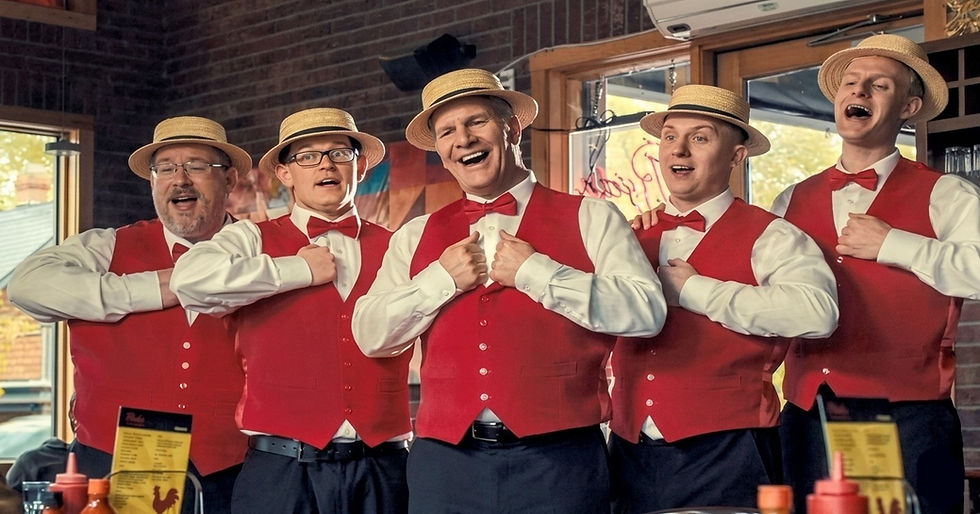
Guests do not need an explanation sheet to understand a well-programmed theme. They recognise it through musical cues: era, rhythm, lyrical references, vocal style, costume and the sequence of songs. A barbershop quartet performing close-harmony favourites immediately suggests vintage charm and skilled live entertainment. Country harmony can establish an approachable western flavour. Christmas repertoire creates a seasonal atmosphere within the opening number.
The key is choosing a clear centre. An event marketed as a 1950s celebration should not suddenly move into unrelated contemporary material simply because it is popular. Variety is valuable, but it needs a through-line. That might be a decade, a film-inspired mood, a regional identity, a season or a shared emotional tone such as celebration, nostalgia or romance.
A broader concept often works best for mixed-age audiences. Rather than limiting a programme to obscure songs from one year, frame it around timeless love songs, classic vocal groups, songs of the stage or festive favourites. This gives performers room to shape the set around what audiences actually respond to.
Choose songs guests know, then add character
Recognition creates connection. When guests know the chorus, smile at the opening phrase or remember a song from an important period of their lives, the entertainment becomes personal. That does not mean every selection must be predictable. A familiar song arranged with crisp four-part harmony can feel fresh, while one or two less expected choices add personality and depth.
For corporate audiences, favour songs with broad appeal and positive energy. For weddings and private celebrations, selections can be more personal, particularly when they reflect the couple, guest of honour or family history. For public-facing promotions, lead with immediate hooks and keep introductions brief.
Lyrics matter as much as melody. A song may fit an era but carry sentiments that are unsuitable for a client reception, a family event or a formal dinner. Professional programming means considering the full message, not only the tune.
Shape the energy across the event
Themed music works best when it has movement. A set made entirely of high-energy numbers can become tiring; one made solely of ballads can fade into the background. Good programming gives guests contrast while protecting the overall mood.
Open with something confident and recognisable. This earns attention quickly and signals the quality of the performance. From there, alternate pace and texture: an upbeat ensemble number, a smoother standard, a comic or interactive feature, then a strong closer. The details depend on the brief, but the principle remains the same: give the audience reasons to stay engaged.
For longer bookings, avoid repeating the same emotional temperature in every set. A welcome performance might be light and sociable, while a later feature set can be bigger, brighter and more participatory. At a Christmas function, for example, familiar seasonal classics can welcome guests before dinner, with livelier sing-along material reserved for later in the evening.
Programme for conversation as well as applause
Not every event needs concert-level volume or constant audience interaction. At business functions, guests may need to speak with colleagues, clients and partners. At a wedding meal, the couple may want atmosphere without drawing focus from speeches and service.
A cappella is especially effective in these settings because it can feel present and polished without the equipment demands of amplified instrumental entertainment. However, even a vocal act needs the right placement and timing. A performance near the bar may energise a reception; the same placement beside a registration desk may create a bottleneck. Discuss guest flow, catering service, speeches and announcements before finalising the programme.
Match the format to the theme
Themed programming is not limited to a stage set. A quartet can welcome guests at the door, make a surprise appearance during dinner, perform between award presentations or provide roving entertainment at a public attraction. Each format changes what the repertoire should do.
A roving performance benefits from short, instantly recognisable songs and flexible transitions. A seated show allows more dynamic arrangements, storytelling and audience interaction. A media appearance needs concise material that communicates the theme within seconds. A wedding proposal or anniversary surprise may need one meaningful song delivered with complete focus.
Costume and presentation should support the programme without becoming a distraction. Smart coordinated attire suits many corporate events. Seasonal accessories, vintage styling or subtle branded colours can strengthen a concept where appropriate. The best visual choices look intentional and professional, never like an afterthought.
Use the brief to prevent themed music mistakes
Most programming problems begin with an incomplete brief. A client may request "jazz" when they mean elegant background standards, or "retro" when they mean lively crowd-pleasers from several decades. Clarify the language before rehearsal plans are made.
Share the event schedule, venue details, audience profile and any essential songs or songs to avoid. Mention whether children will attend, whether the event includes a brand message and whether there are cultural considerations. Be realistic about requests that are highly specific. A custom arrangement can be a memorable addition, but it requires suitable lead time and may not be necessary if an existing repertoire selection already achieves the desired effect.
It also helps to identify the non-negotiable moment. Is the music required for guest arrival, the first dance, a product reveal, an awards entrance or a festive finale? Once that moment is protected, the rest of the programme can be designed around it.
Why live harmony gives themes more impact
Recorded playlists are convenient, but they cannot read a room, respond to applause or adjust a programme when timings change. Live harmony adds the human element that turns a theme into an occasion. It also gives organisers a distinctive focal point without the technical complexity and space requirements of a larger act.
With more than 20 years of experience and over 250 performances, Executive Quartets has seen how quickly a tailored vocal performance can establish the right mood. Barbershop, doo wop, country, jazz standards and Christmas music each offer a different route into a theme, while the shared standard remains polished four-part harmony.
The trade-off is that live entertainment benefits from early planning. The clearer the brief, the better the performers can match repertoire, presentation and timing to the event. A last-minute booking can still deliver excellent music, but a well-developed theme gives everyone more room to make the experience distinctive.
Let the final song do its job
A programme should finish with purpose. For some events, that means a celebratory number that invites applause and photographs. For others, it means a warm, elegant close that lets guests return naturally to conversation or move into the next part of the schedule.
Choose a closing song that feels like the event you intended to create, not merely the last item available. When the final harmony lands and the room responds, your theme has moved beyond decoration and become a shared memory.


Comments